Insights
Is AI in Facility Management Only Hype? Here's the Truth for 2026
AI can reduce downtime, lower energy costs, and streamline compliance—but only if it’s implemented correctly. Here’s what’s working in facility management in 2026.
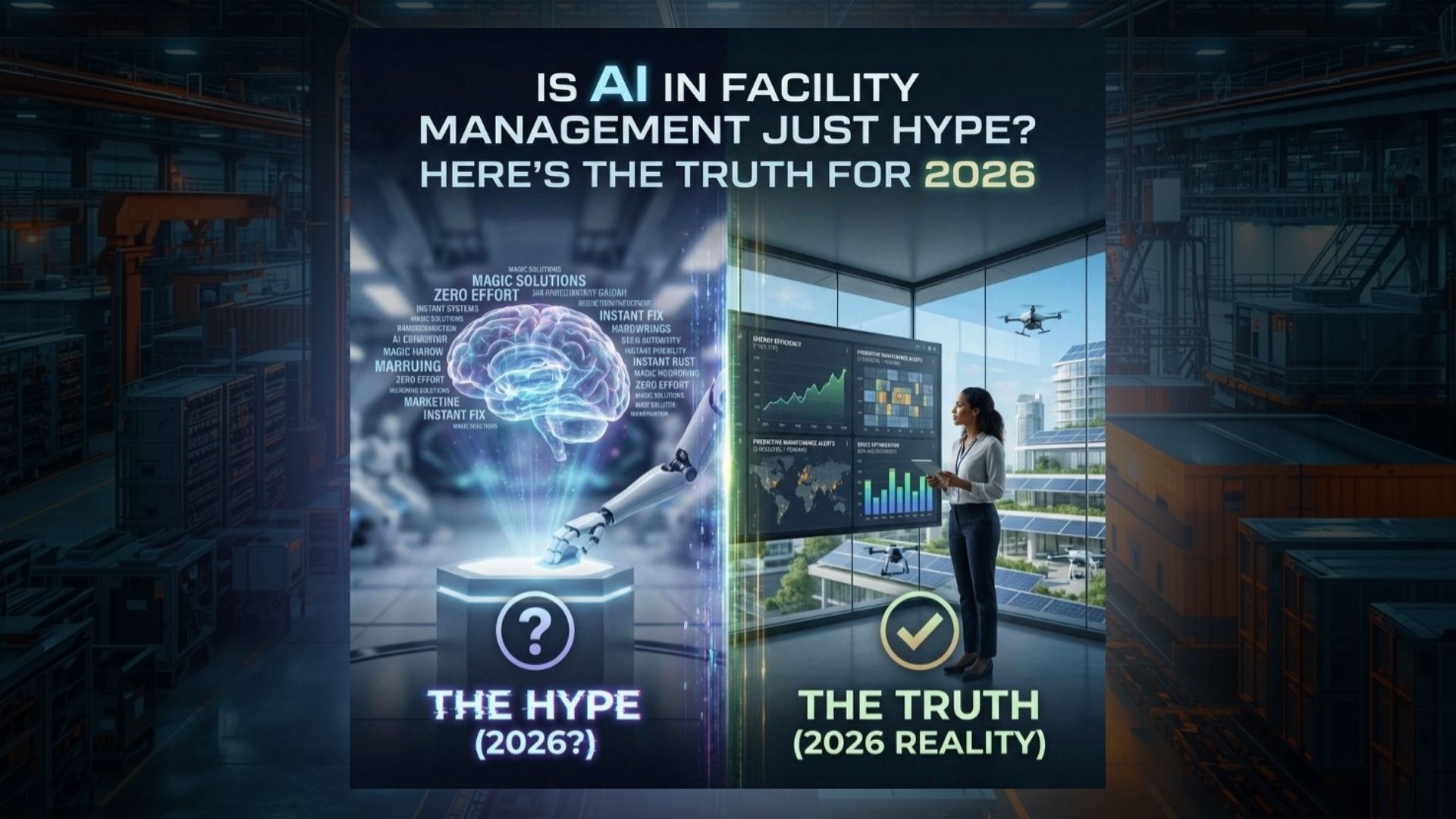
This post breaks down what’s real (and what’s fluff) about AI in facility management in 2026—especially for mission-critical environments like data centers, hospitals, and manufacturing. It explains how AI is shifting FM teams from reactive work (fix it when it breaks) to proactive operations through predictive maintenance, where sensors and machine learning detect early warning signs before failures turn into downtime.
It highlights the most valuable use cases facilities are seeing today: smarter maintenance scheduling based on real equipment conditions, AI-driven energy optimization that can reduce usage without sacrificing comfort or uptime, automated compliance tracking that prevents missed requirements, and admin automation that takes repetitive work off the plate of facility leaders.
The post also gives an honest reality check on adoption barriers—like the AI skills gap, the need for strong data and system integration foundations, and vendors who sell great demos but don’t hold up in the field. It closes with a practical approach: start with specific pain points, build infrastructure first, train your people, and choose partners who understand real facility operations—not just AI buzzwords.
Let's cut to the chase: AI in facility management isn't hype. It's delivering real, measurable results right now.
But here's the catch: not every AI pitch lives up to the promise. Some vendors are selling shiny demos that fall apart in the real world. Others are pushing solutions that require infrastructure most facilities don't have yet.
So what's actually working in 2026? What's still vaporware? And how do you separate the signal from the noise?
We've spent years embedded in mission-critical facilities: data centers, hospitals, manufacturing plants. We've seen what AI can actually do when it's implemented right. Here's the unfiltered truth.
For decades, facility management operated on a simple principle: something breaks, you fix it. Maybe you scheduled preventive maintenance based on manufacturer recommendations or calendar intervals. But mostly, you waited for problems to announce themselves.
AI changes that equation entirely.
Predictive maintenance powered by AI doesn't just identify problems: it catches them before they become emergencies. IoT sensors on your HVAC equipment, combined with thermal imaging and machine learning algorithms, can detect early signs of wear weeks before failure disrupts operations.
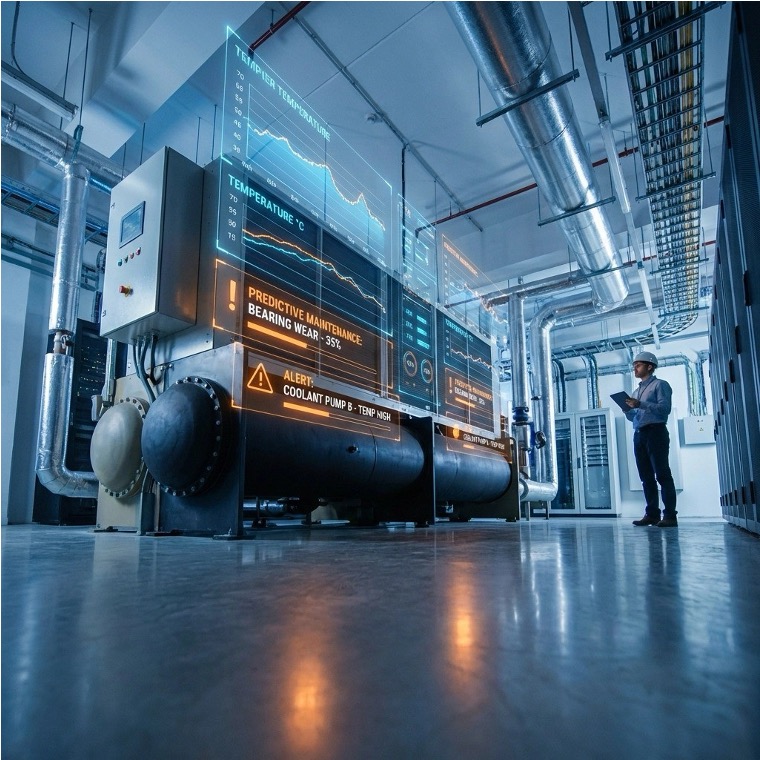
This isn't theoretical. Facilities using AI-driven predictive maintenance report:
• Reduced unplanned downtime by catching failures early
• Extended asset lifespan through optimized maintenance scheduling
• Lower maintenance costs by eliminating unnecessary preventive work
• Better resource allocation with teams focused on strategic work instead of firefighting
One documented case showed new location setup time reduced from 3 months to 3 weeks through standardized, AI-optimized processes. That's not incremental improvement: that's a fundamental shift in how operations work.
Forget the buzzwords. Here's where AI is making a tangible difference in facility operations right now.
The old approach: replace parts on a schedule, whether they need it or not. The AI approach: analyze vibration patterns, temperature fluctuations, power consumption, and operational stress to determine
exactly when equipment needs attention.
This isn't just about preventing failures. It's about optimizing your entire maintenance operation. Your team spends less time on routine checks and more time on high-value work. Parts get replaced when they need replacing: not before, not after.
Energy costs keep climbing. So do sustainability requirements. AI tackles both problems simultaneously.
Smart systems analyze occupancy patterns, weather forecasts, equipment efficiency, and utility pricing to optimize energy consumption in real-time. They adjust HVAC setpoints, lighting levels, and equipment schedules automatically: often achieving 15-30% energy savings without sacrificing occupant comfort.

For mission-critical facilities where uptime is non-negotiable, AI helps balance redundancy requirements with efficiency goals. You maintain the reliability you need while reducing the waste you don't.
Regulatory requirements don't get simpler. Between safety codes, environmental regulations, and industry- specific mandates, compliance has become a full-time job at many facilities.
AI systems track regulatory requirements in real-time, flag upcoming deadlines, and automate documentation. They catch compliance gaps before auditors do. And they free your team from drowning in paperwork so they can focus on actual operations.
This might be the least glamorous application: and one of the most impactful.
AI handles work order creation, invoice processing, vendor communications, and reporting automatically.n Tasks that used to consume hours of staff time happen in the background. Your facility managers become strategists instead of paper-pushers.
Here's where we get real about what's holding AI adoption back. Because the technology exists: but implementation isn't always straightforward.
50% of organizations report insufficient employee AI skill sets as a significant barrier to successful deployment. The tools are only as good as the people using them.
This isn't about hiring data scientists. It's about training facility managers to work with AI systems effectively: interpreting recommendations, validating alerts, and making informed decisions based on data they've never had access to before.

Organizations that invest in comprehensive training see dramatically better results than those that just install software and hope for the best.
AI needs data. Lots of it. From multiple systems. In formats that actually work together.
If your facility still manages work orders through email or spreadsheets, you're not ready for advanced AI applications. You need foundational infrastructure first: connected sensors, integrated building management systems, and centralized data platforms.
The organizations seeing the best AI results built this foundation deliberately. They didn't skip steps.
The AI gold rush has attracted plenty of companies with impressive demos and questionable real-world performance. Some solutions work beautifully in controlled environments and fall apart when they encounter the messy reality of actual facilities.
Ask hard questions. Demand case studies with specific, verifiable metrics. Talk to reference customers who've been using the system for more than six months. The legitimate players welcome scrutiny.
The organizations getting ahead aren't chasing every new AI announcement. They're taking a methodical approach:
Start with your biggest pain points. Where do equipment failures hurt most? Where are energy costs climbing fastest? Where does your team spend time on work that doesn't add value? AI works best when it solves specific, well-defined problems.
Build the foundation first. Get your sensors connected. Centralize your data. Establish baseline metrics so you can actually measure improvement. Skipping this step is the most common reason AI projects fail.
Invest in your people. Technology is only half the equation. Your team needs training, support, and clear processes for working with AI recommendations. The goal is augmented intelligence: humans and machines working together: not replacement.
Choose partners carefully. Work with organizations that understand your industry, your specific challenges, and the realities of mission-critical operations. Generic AI platforms rarely deliver the results that purpose-built solutions provide.
AI in facility management has moved past the hype cycle. The early adopters have proven what works. The technology has matured. The use cases are clear.
But success isn't automatic. It requires intentional implementation, proper infrastructure, trained teams, and realistic expectations.
The facilities that get this right will operate more efficiently, respond faster to problems, and make better decisions with better data. They'll spend less on energy, less on emergency repairs, and less on administrative overhead.
The facilities that don't will fall further behind as operational costs climb and talent becomes harder to find.
The question isn't whether AI will transform facility management. It already is. The question is whether your organization will lead that transformation or react to it.
At Steadfast Operations, we help mission-critical facilities navigate these decisions. From strategic planning to hands-on implementation, we bring decades of operational experience to every engagement.
If you're evaluating AI for your facility operations, let's talk.
.png)